

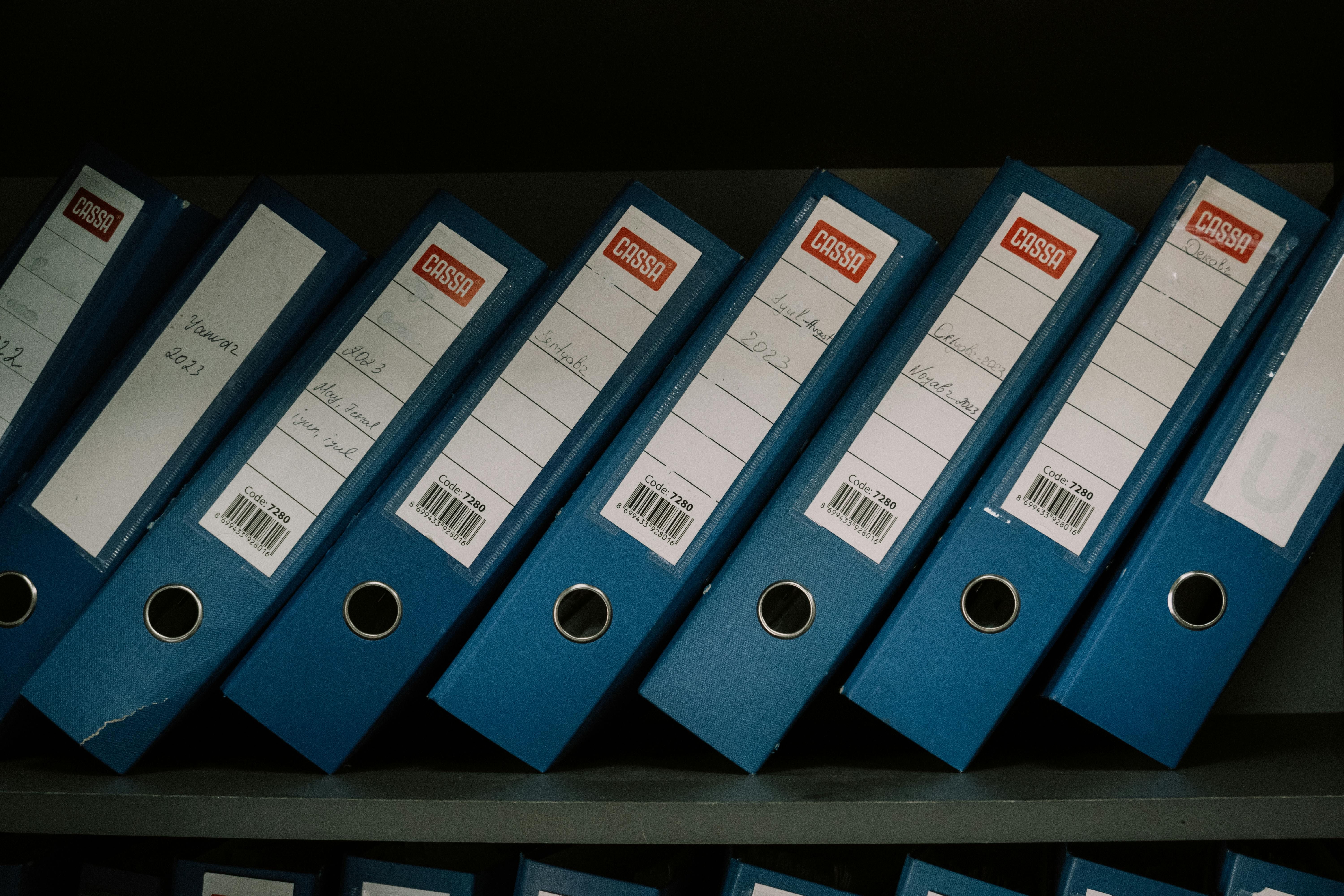


What TRDs are, why they are mandatory and how to build them step by step.
In Colombia's business environment, organizing and preserving information is not only a matter of internal efficiency but also a strict regulatory requirement. If you have ever wondered how to organize your company's archive to avoid penalties, optimize space, and speed up decision-making, the answer lies in the Tablas de Retención Documental (TRD).
TRD are the core of any document management system. In this practical guide we will explain what they are, what the benefits of implementing them are, how they are structured under the guidelines of the Archivo General de la Nación (AGN) and how specialized software can automate their entire lifecycle.
What are Document Retention Schedules (TRD)?
The Tablas de Retención Documental (TRD) are an essential archival instrument that defines the list of series, subseries, and document types produced or received by an organization's various departments. Each of these elements is assigned a retention period across the different archive phases (Management, Central, and Historical) and its final disposition (total conservation, elimination, selection, or reproduction).
To understand TRD it is essential to know the document lifecycle, which divides the life of records into three main phases:
- Management or Office Archive: Active documents subject to continuous administrative consultation. They remain here while matters are being processed and resolved.
- Central Archive: Documents transferred from the management archive once their processing is complete, which are no longer frequently consulted but still retain administrative, legal, fiscal, or technical value.
- Historical Archive: Documents that acquire permanent value (historical, cultural, or scientific) and must be preserved for life for posterity.
Why are TRD mandatory in Colombia?
In Colombia, the AGN TRD regulations are clear. Ley 594 of 2000 (the General Archives Law) and Decree 1080 of 2015 establish that both public entities and private parties performing public functions are obligated to prepare, adopt, and apply Document Retention Schedules.
But beyond the legal obligation, implementing TRD in the private sector offers enormous strategic advantages:
- Freeing up physical and digital space: It lets you know exactly when a document is no longer valid and can be safely destroyed, reducing storage costs.
- Immediate information retrieval: By classifying documents into logical series and subseries, staff can retrieve any file in seconds instead of hours.
- Legal and fiscal security: Ensures that accounting, tax, and legal documents are retained for the number of years required by law (for example, 10 years for accounting records under the Commercial Code).
- Knowledge preservation: Identifies the documents with historical value for the company and guarantees their long-term conservation.
Structure of a TRD (Practical Example)
To understand how this archival instrument looks, below we present an example of a document retention schedule adapted for a corporate Human Resources department:
Abbreviations: AG: Management Archive | AC: Central Archive | CT: Total Conservation | E: Elimination.
How to Build TRD in Your Company: Step by Step
Building TRD is an interdisciplinary process that requires archival and legal knowledge as well as an understanding of the company's internal operations. The suggested steps are:
- Preliminary Research: Gather information about the company's organizational structure, job-function manuals, and the legislation governing its commercial activity.
- Survey of Document Producers: Conduct interviews with the leaders of each area to identify which documents they produce on a daily basis, how often they consult them, and what they are used for.
- Classification and Cleanup: Group document types into logical series and subseries according to each office's functions.
- Document Appraisal: Determine the primary values (administrative, accounting, legal) and secondary values (historical, scientific) of each series in order to establish retention periods and final disposition.
- Approval and Implementation: Present the project to the company's Archive Committee for formal approval and onboarding of all staff.
"Document Retention Schedules are not a static document; they must be updated in response to structural changes in the company or new legal regulations."
Automation: Digital TRD with an SGD / DMS
In the digital age, managing TRD manually in physical filing cabinets or shared network folders (such as Drive or Dropbox) is a titanic and error-prone task. If an employee saves a payroll document in the wrong folder or deletes it prematurely, the company is exposed to negative audits and penalties.
A Document Management Software (SGD / DMS) like Dmsiged solves this problem at its root by digitizing and automating the application of TRD:
- Automatic Rule Application: When a file is uploaded to the system, it is classified into its corresponding document series, and the software automatically assigns the retention periods defined in the TRD.
- Transfer and Retention Alerts: The system issues automatic notifications when a document series completes its time in the management archive and must move to the central archive, or when it has completed its cycle and is ready for final disposition (elimination or conservation).
- Electronic Signatures and Traceability: Ensures that any change or deletion of documents requires signed approvals and maintains an unalterable audit trail.
Implementing Document Retention Schedules is the definitive step to transform your physical or disorganized archive into an agile, secure digital system that is 100% aligned with Colombian law. At Archivos y Sistemas we have the expert archivists and cutting-edge technology to help you throughout the entire design and automation process with Dmsiged.